Redefining Last-Mile Commute For Speed, Trust, And Reliability
To reduce user drop-offs and improve completion rates by redesigning the post-ride metro ticket booking flow, while giving users greater flexibility and control over their journey.
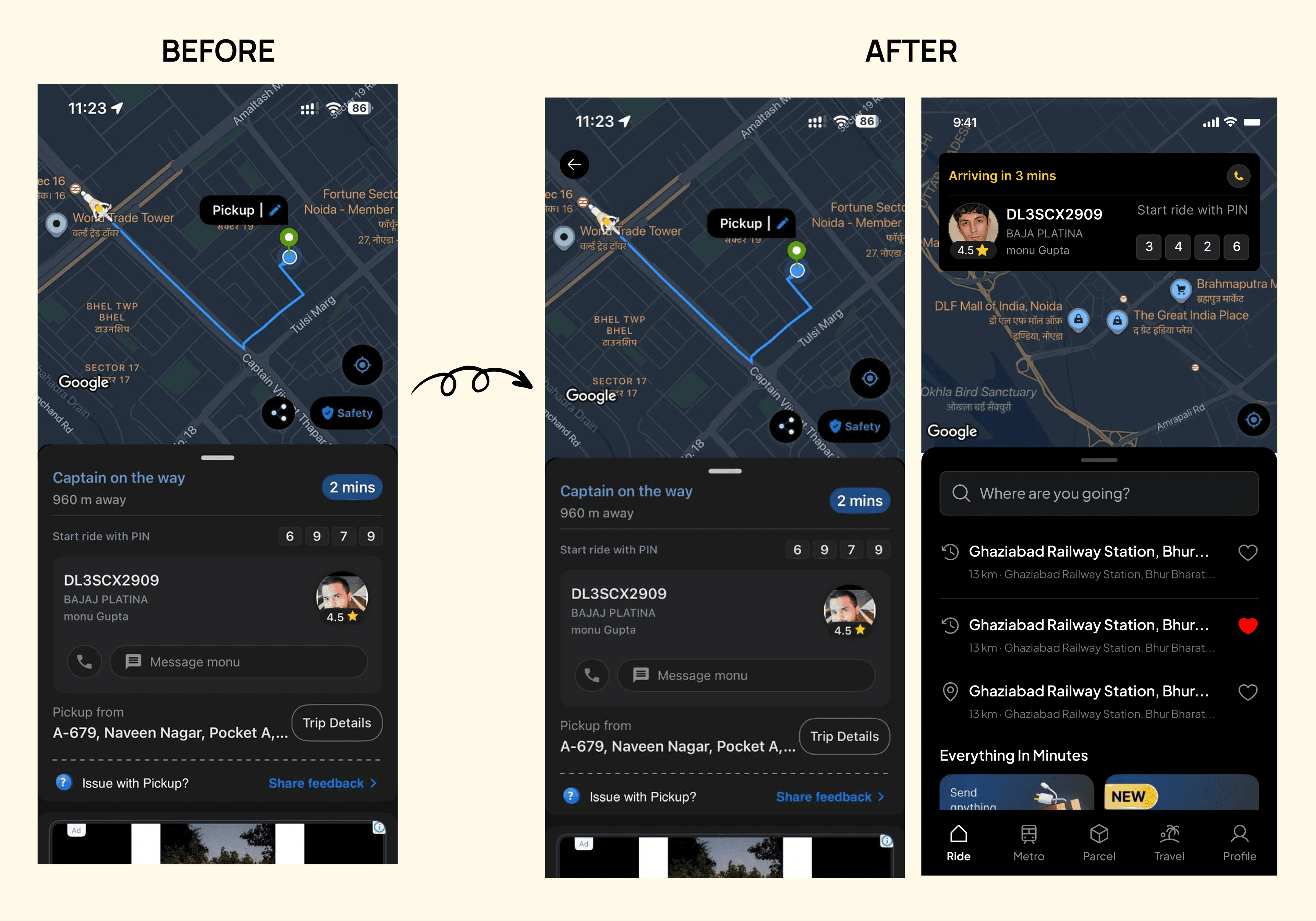
The redesigned experience allows users to book metro tickets post ride confirmation, reducing dependency on physical queues and enabling a seamless, end-to-end journey within the same app.
The real problem
It's not about booking. It's about what you can't do while the ride is active.
Right now, ride apps assume you're doing just one thing, tracking your ride. But real life isn't like that. People are often juggling multiple steps, like booking a cab to the metro, then needing a ticket, then another ride.
Since the app doesn't allow this flexibility, users end up finding their own ways, switching apps, delaying bookings, or canceling rides. It's small friction, but it happens all the time.
The real gap: Users should be able to leave the tracking screen and do other things without affecting their ride.
What's Working Well In The Current Flow?
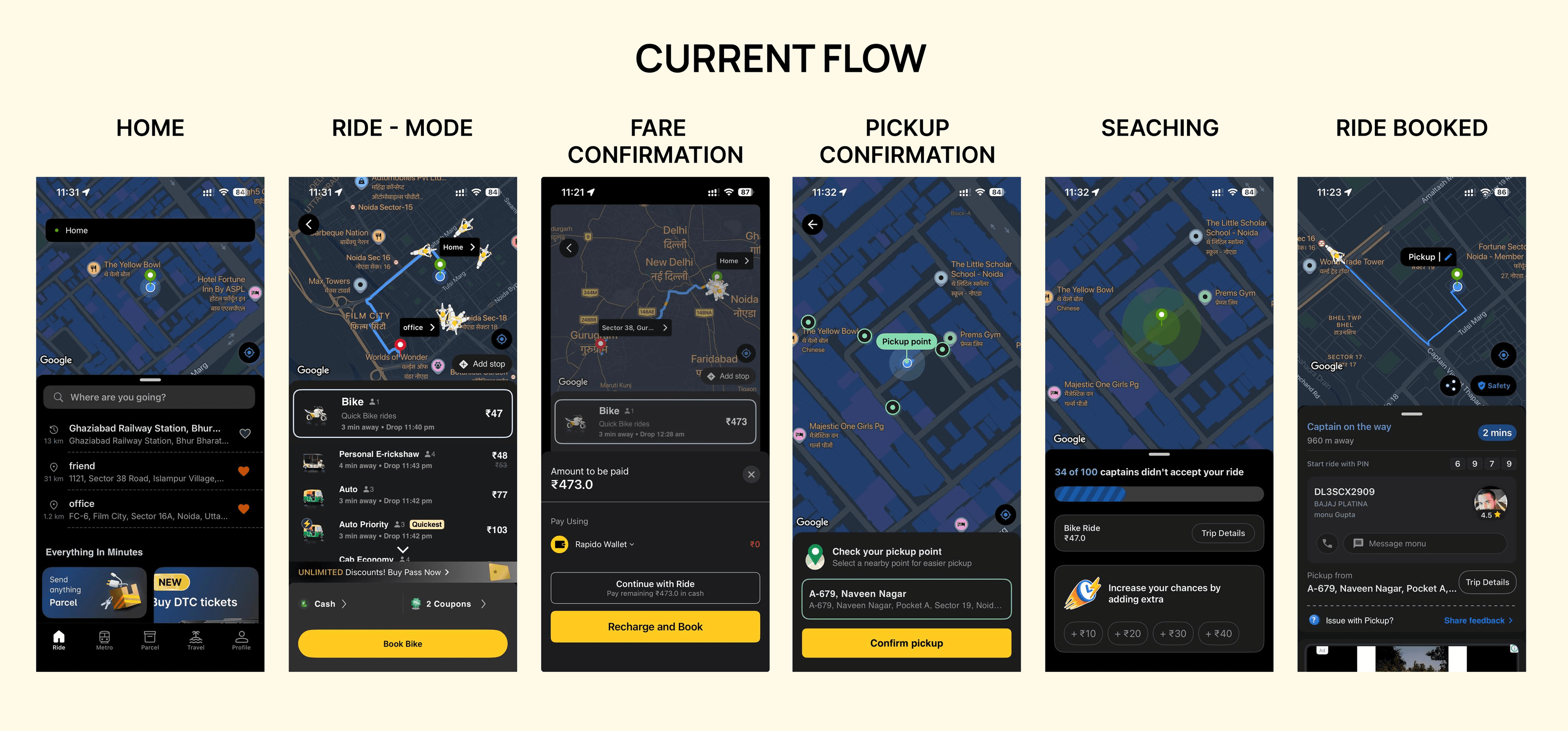
Before identifying any UX opportunities, it's important to first understand and appreciate the existing flow. Rapido serves a massive user base and operates across multiple cities, making its system both complex and scalable.
1. Quickly Access Your Saved Addresses And Recent Rides For Faster Booking
Hick's Law - The Time It Takes To Make A Decision Increases With The Number And Complexity Of Choices.
Reduce mental load with fewer, high-impact options while using familiar patterns like saved and recent locations for faster selection.
2. Gives Clear Review Price And Pickup Details Before Booking Your Ride
Miller's Law - Don't Expect Users To Remember Things From Earlier Screens. Repeat Important Info Where Decisions Are Being Made.
The interface helps users confirm location and pricing by repeating key details at the decision point, so they don't have to rely on memory. Guide users and prevent mistakes before they happen, like disabling actions until requirements are met.
Where it hurts
Two moments. Same trap. Every commuter has lived both.
Right now, ride apps assume you're doing just one thing, tracking your ride. But real life isn't like that. People are often juggling multiple steps, like booking a cab to the metro, then needing a ticket, then another ride.
Since the app doesn't allow this flexibility, users end up finding their own ways, switching apps, delaying bookings, or canceling rides. It's small friction, but it happens all the time.
The real gap: Users should be able to leave the tracking screen and do other things without affecting their ride.
Problem 1: Heading to the metro

“I booked the cab. Now I need a metro ticket but the app won’t let me.”
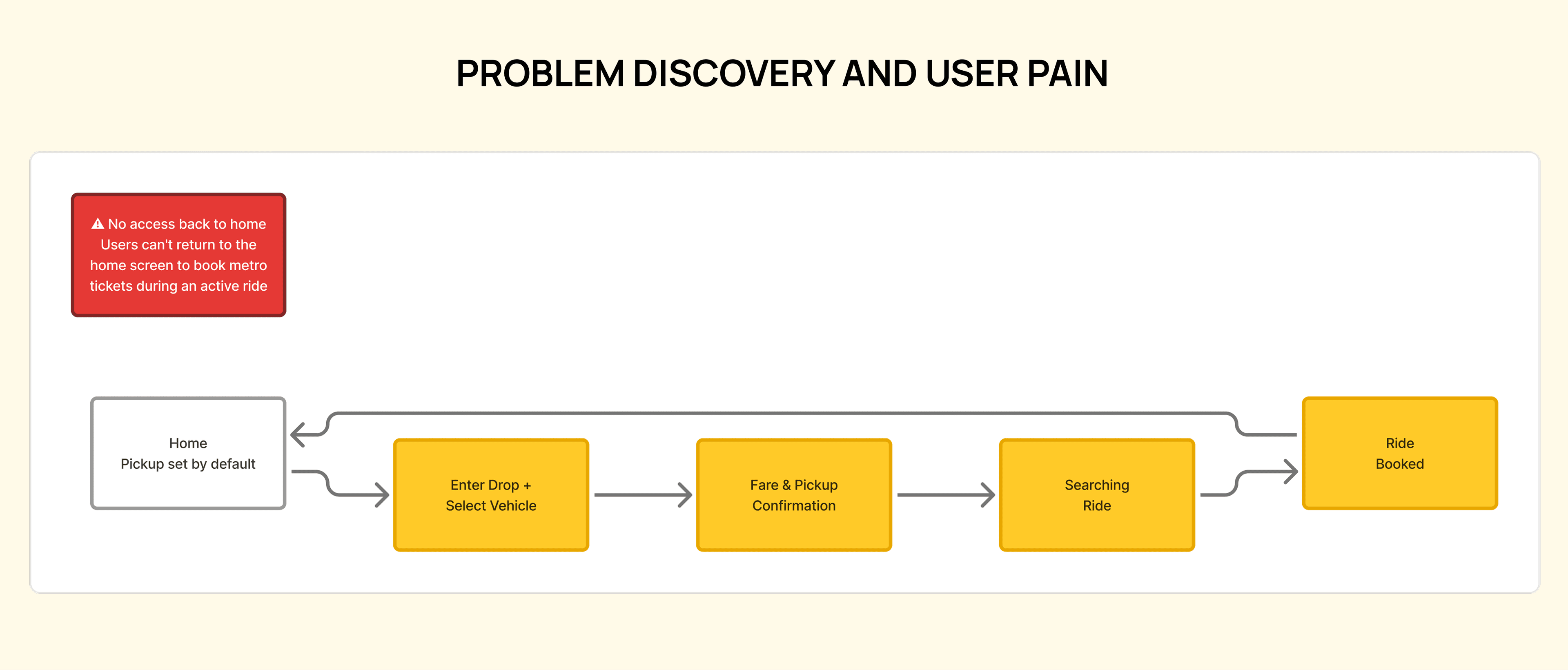
Rider books a cab to the metro station. They plan to buy the metro ticket on the way so they can skip the counter queue. But the ride tracking screen has taken over the app. They can\u2019t open the metro booking service without backing out of the live ride.
Result: either cancel the cab and rebook, or arrive at the station and stand in the same queue they were trying to avoid.
Problem 2: On the metro

“I’m almost at my stop. I want to pre-book a cab but then I lose everything else.”
Rider is on the metro and wants to book the next cab before reaching the station. But starting a new booking pulls them out of the ride they still need to track, so they wait — and often book too late.
Result: the rider hesitates to book early, the cab arrives late, surge has set in, and the benefit of pre-booking is lost.
The solution
Enhancing Experience Through User Control &Freedom
Hypothesis
- If users face difficulty performing multiple tasks during an active ride, then they are likely to experience frustration and delay in completing their journey.
- If users can access multiple services (ride + metro) within the same flow, then dependency on external apps and waiting time will reduce.
- If users face difficulty performing multiple tasks during an active ride, then they are likely to experience frustration and delay in completing their journey.
- If multi-tasking is not supported, then users may drop off or switch to alternative apps to complete their remaining tasks.
The Decision - Same ride. New relationship with the app.
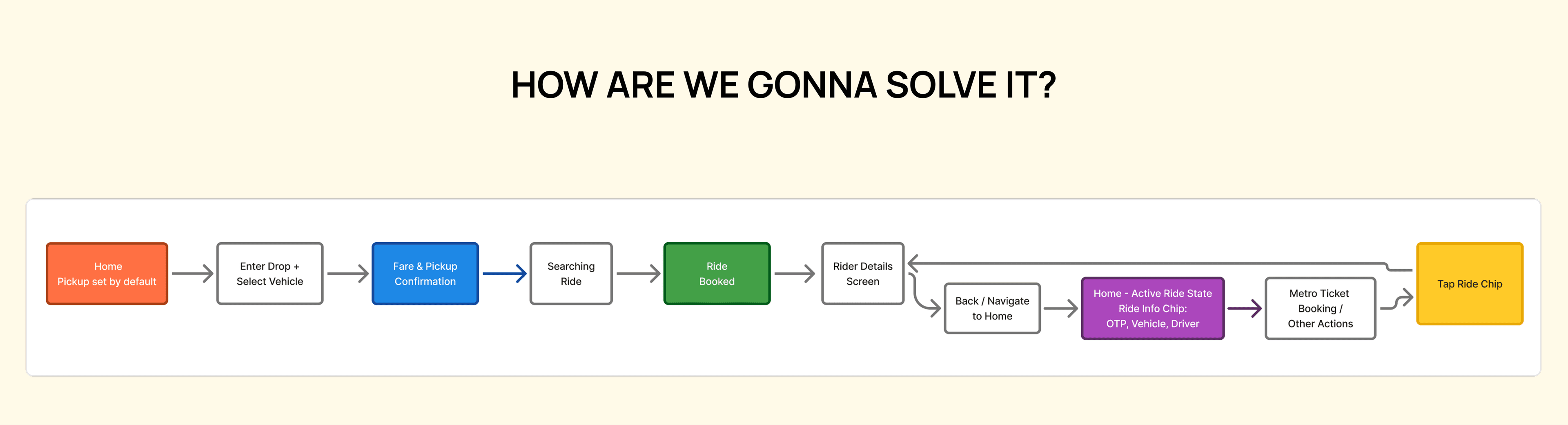
- Once a ride is booked, it compresses into a slim bar pinned above the tab navigation. Driver name, ETA, tap to expand. Home, metro, offers, profile — all still one tap away.
- A clear "back to home" action on the tracking screen — which today doesn't exist. The ride stays active in the background. The rider is trusted to come back.
Now users can seamlessly switch between ride, metro, or other services without breaking their journey.
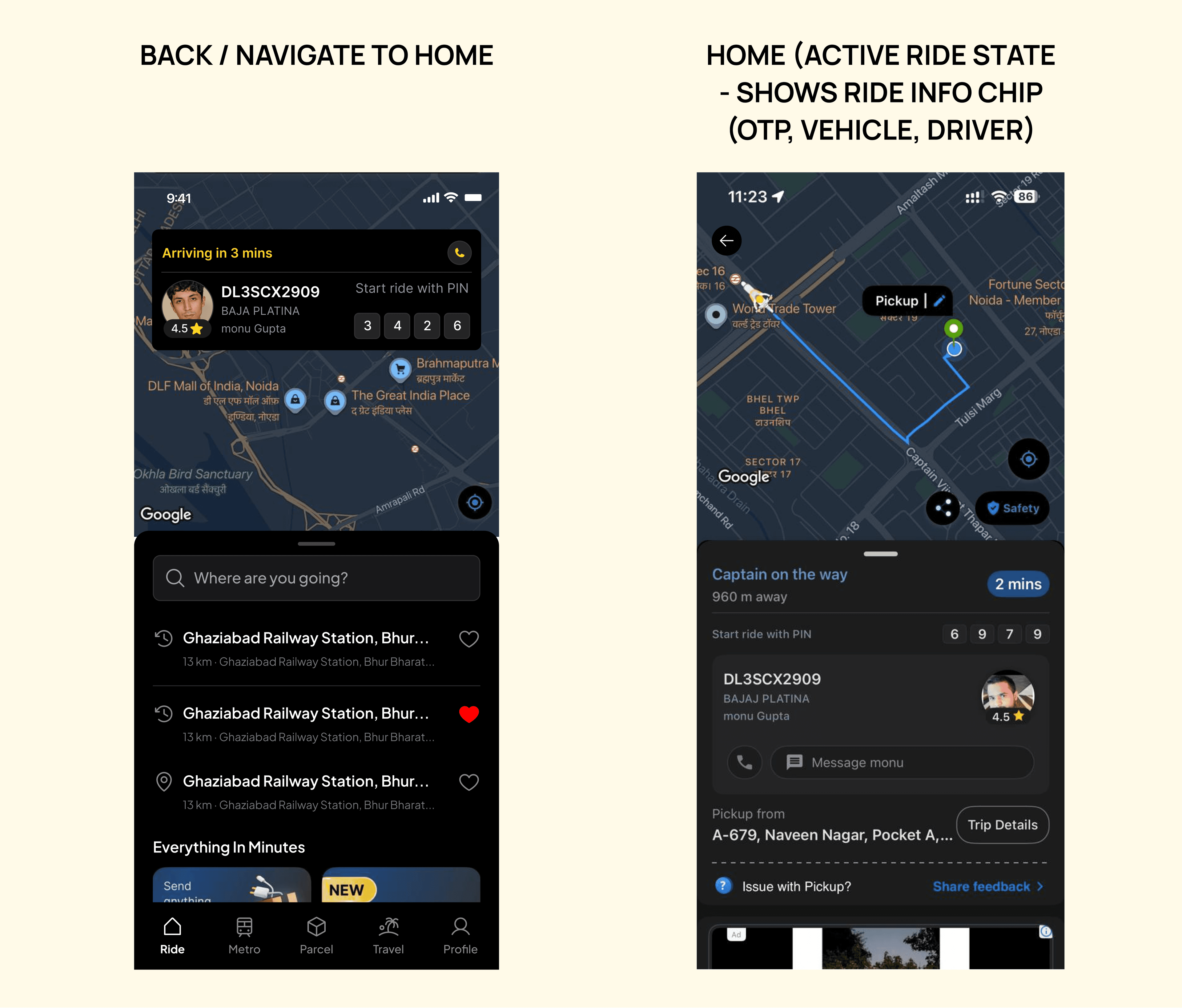
What changed
Same ride. New relationship with the app.
| Decision | Before | After |
|---|---|---|
| Home screen during a ride | Blocked during ride | Always available |
| Booking a second service | Requires cancel or second app | One tap from ride bar |
| Pre-booking from the metro | Locks out everything else | Ride runs in background |
| Driver info | Full-screen only | Always-visible bar, expand on tap |
Impact
One navigation fix. Four business levers moved.
Projected KPIs
This is a concept project, so these are directional, not shipped.
- Revenue per ride: Cross-service bookings (metro tickets, food, return cabs) during active rides turn idle tracker time into incremental GMV.
- Decrease cancellation rate: Riders who complete full journeys inside the app come back for the next one.
“More revenue per ride, fewer cancellations, stickier users, lighter support one navigation fix moves four business levers at once.”